We are having a short break over Christmas. Please click here for any orthodontic emergencies.

We are having a short break over Christmas. Please click here for any orthodontic emergencies.


Your bite does more than determine how your teeth come together. The relationship between your teeth, jaws and surrounding facial structures can also influence your facial features, including the shape of your profile, the position of your lips, and the proportions of your lower face.
While orthodontic treatment is primarily focused on creating a healthy, functional bite and well-aligned teeth, orthodontic principles can also influence facial balance. This is one reason facial aesthetics can be considered alongside function when planning orthodontic treatment.
So, how does your bite affect the way your face looks? Let’s take a closer look at common bite problems and how they relate to facial features.
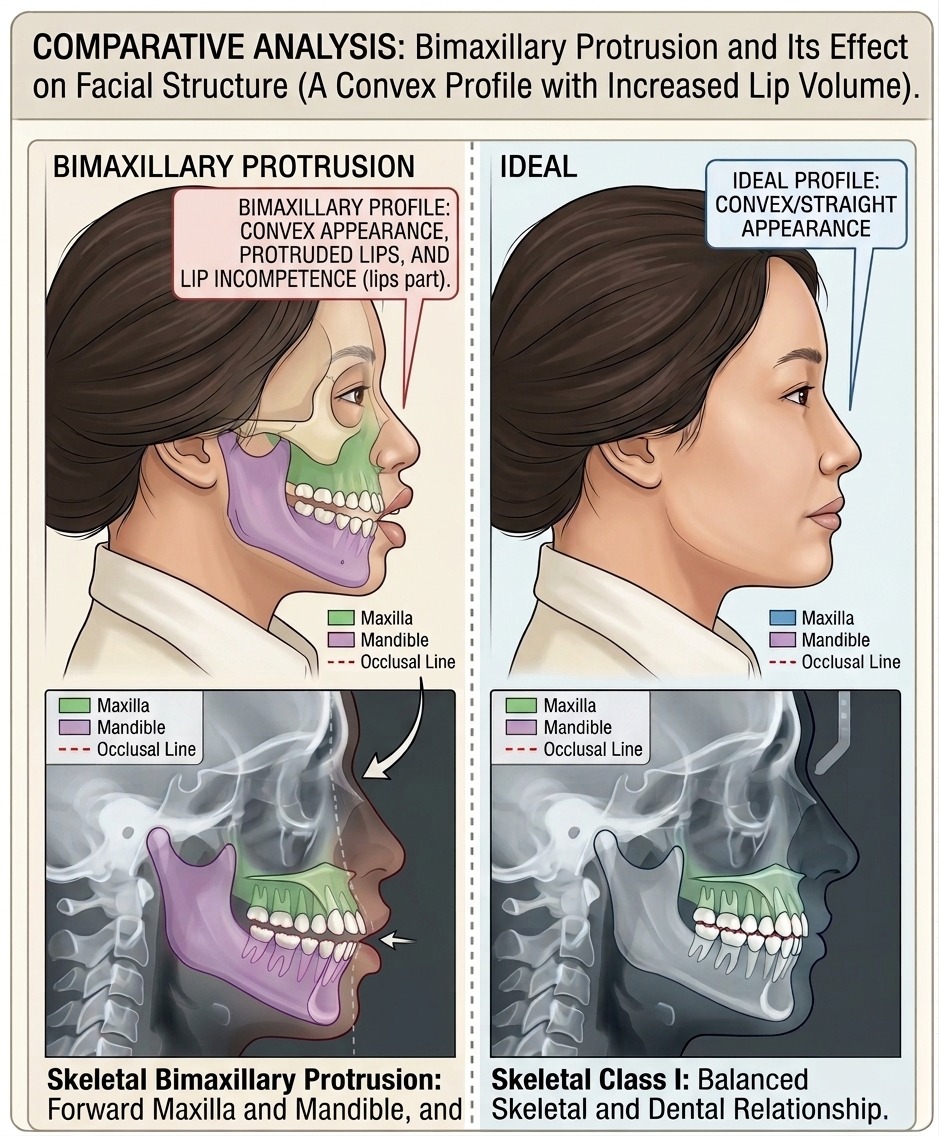
When your front teeth and/or the base of your jaw flare forward, it can result in what’s known as a protrusion. Teeth can angle outward (dentoalveolar protrusion), sometimes the upper jaw sits too far forward (skeletal protrusion), or we see a combination of the two (bimaxillary protrusion).
Depending on the underlying cause and severity, protrusion can be noticeable in your profile and influence the way your lips sit. In more pronounced cases, the lips may have difficulty closing comfortably, which can contribute to increased activity of the muscles around the mouth.
When a protrusion is corrected, changes to the position of the teeth and lips may create a more balanced facial profile. The extent of any change in facial appearance will depend on the individual’s teeth, jaw structure, age, and treatment approach.
An underbite, which is clinically referred to as a Class III malocclusion, occurs when the lower front teeth or the lower jaw sit forward of the upper front teeth. Depending on its severity and underlying cause, an underbite can influence the facial profile and the proportions of the lower face.
The lower lip and chin may appear more prominent, while the mid-face and upper lip can appear relatively less prominent. These changes can make the lower third of the face appear more pronounced.
In some cases, improving jaw alignment and correcting the bite can create a more balanced relationship between the upper and lower jaws. However, the approach and potential changes to facial appearance depend on whether the underbite is primarily caused by tooth position, jaw position or a combination of both.
For growing patients with certain skeletal bite problems, early assessment can be particularly important because growth can be considered when planning treatment.
A deep bite, sometimes referred to as a deep overbite, occurs when the upper front teeth excessively overlap the lower front teeth. A significant overbite can affect the appearance and proportions of the lower third of the face.
Depending on the individual, a deep bite may make the lower jaw and chin appear less prominent or give the lower face a shorter appearance. It can also influence the position of the lower lip and the way the lips come together.
Correcting the underlying bite can improve the relationship between the upper and lower teeth and, in some cases, contribute to a more balanced facial profile. The potential for jaw improvement or changes to facial proportions depends on the underlying cause of the bite and whether the issue involves the teeth, the jaws or both.
For some patients, particularly those who are still growing, treatment planning can take jaw development into account. For adults with significant skeletal discrepancies, orthodontic treatment may sometimes be combined with other approaches, depending on their individual circumstances.
Although changes to your facial profile is important, orthodontic treatment isn’t simply about changing the way you look.
A well-planned treatment aims to establish a healthy and functional bite, improve tooth alignment and support good long-term oral health. Any changes to your facial features or profile are influenced by a range of factors, including your age, growth and development, tooth position, jaw structure and the type of treatment required.
If you’re concerned about your bite, jaw alignment or facial profile, an orthodontic assessment can help determine what’s contributing to your concerns and what treatment options may be appropriate for you. Book a consultation.
Book a consultation with MP Orthodontics to begin your orthodontic journey.
Monday to Friday: 8:00 am - 5:30 pm
Saturday & Sunday: Closed

Copyright © 2026. MP Orthodontics. All rights reserved.